Subject: "So Long Hackintosh"
If you've been out of the loop recently, Apple recently released the beta version of the upcoming MacOS 27 Golden Gate. This version will run exclusively on Apple Silicon equipped Macs. This marks the end of support for Intel MacBooks and they will no longer receive mainline upgrades. It was something everybody has been anticipating for over the past year, yet it still feels shocking.
My Journey (and the long list of Hardware Failures)
My journey kicked off about two years ago. It was probably one of the most complex projects I had taken at the time. The test subject was an Asus Vivobook S551LB. It had a dual core i5-4200U and 8GB of RAM which was more than sufficient for a project like this. It originally shipped with Windows 8 and had a 512GB HDD but I swapped it out for a 128GB SATA SSD. There were two big, big problems though...
Firstly, the laptop's hinge broke in an accident. This caused the main antenna wire to get cut off, making the Wifi + Bluetooth signal extremely attenuated. Secondly, the speakers on the laptop had also blown out for whatever reason. This caused the laptop to have a static-infused audio, which was irritating to listen to. The ethernet interface didn't work outright within MacOS as well, so I was really working with an impossible machine.
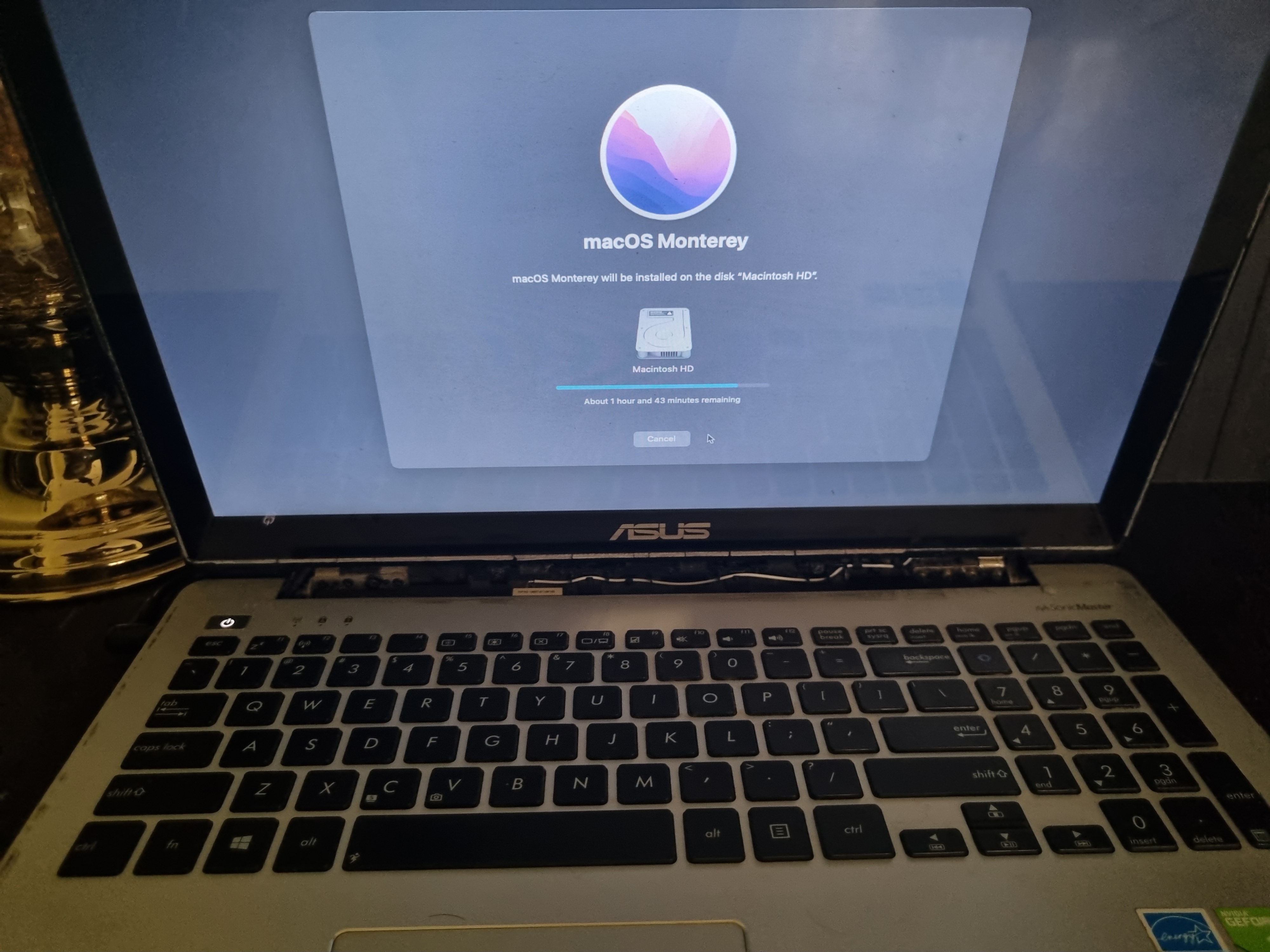
Despite the odds, I mostly overcame all of these issues using USB peripherals. I bought a cheap sound card and it worked shockingly well. I don't really care much about audio quality; it's not like I have crazy audiophile gear or anything. No amount of switching Apple ALC codecs and modifying audio loopbacks would help fix the speakers. It really was just worn out. I tested in Linux just to be sure and the issue persisted.
As for the broken Wi-Fi, I kept the laptop right next to the router so it can pick up a stable enough connection for set-up. Post-install though, I used chris1111's Wireless USB Big Sur Adapter. Apple, in their infinite wisdom, decided to drop support for external wifi dongles after MacOS Big Sur so that was a huge blow. Ethernet didn't work under MacOS despite it working perfectly under Linux which sucked as well.
The last speed bump was mostly to do with running macOS Sonoma. The last version supported on Haswell processors was Monterey but there was a weird quirk with newer versions that allowed for legacy devices to run them (albeit with some drawbacks). You can use a tool called OpenCore Legacy Patcher. This tool was meant to be used with real Mac devices but it works for hackintoshes too. Things worked perfectly after changing a couple flags and rebuilding the config.plist.
The Awesome Community
If there was one thing I'm happy about, it's that I trudged on and followed through the guide. I was just a hair's length away from wiping everything and giving up. It took about two days worth of work to get it up and running to the point where I was comfortable just using it on a whim.
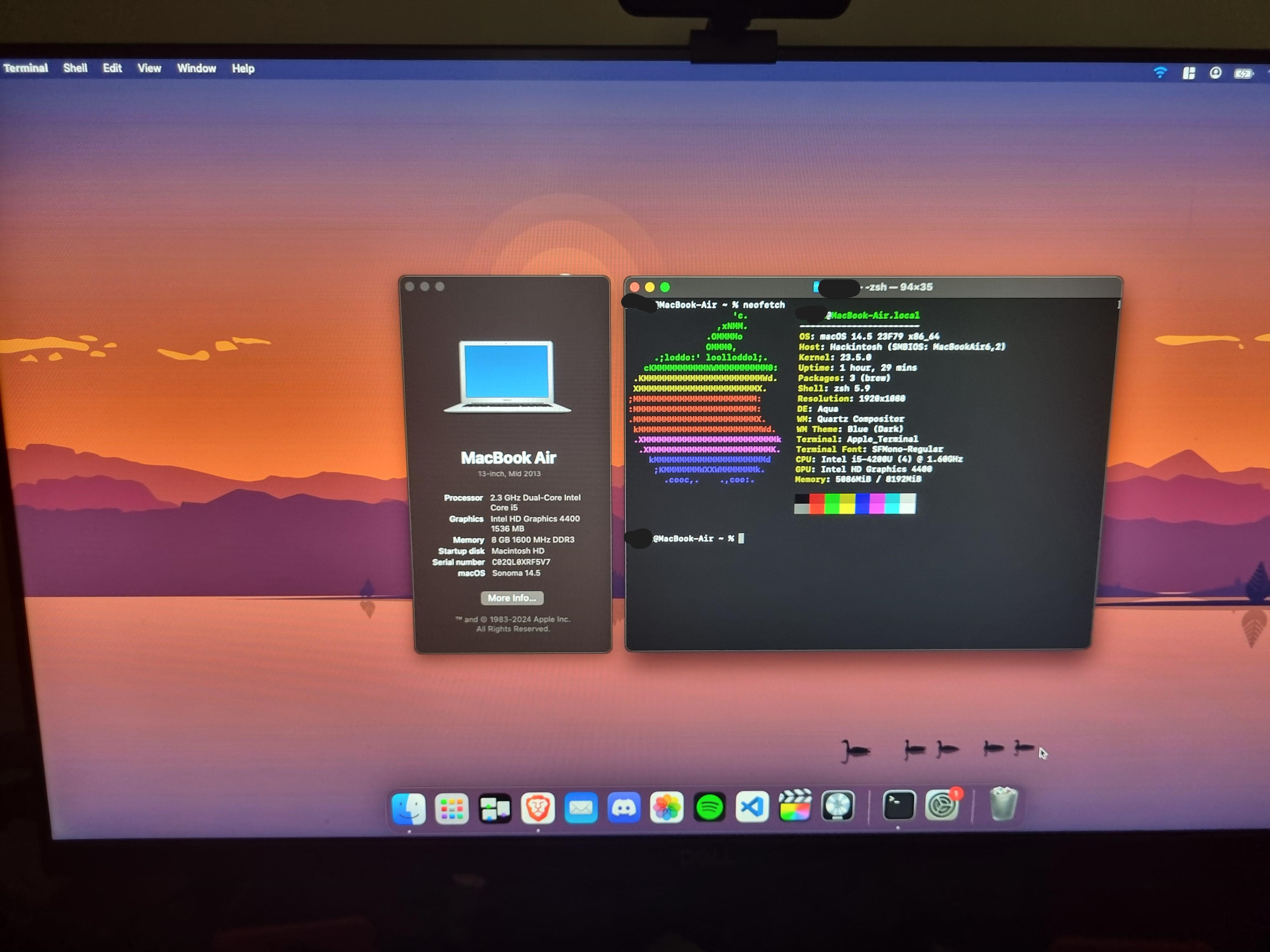
Dortania's OpenCore Guide is probably one of the best pieces of documentation I've read through. I was a complete noob at the time and even I was able to get things up and running. It's not perfect - there were some unexpected errors that I ran into. However, reddit and a lot more obscure forums came to the rescue. I spent most of my time loitering around TonyMacx86 and InsanelyMac looking for others who've faced similar issues.
The majority of the ones I ran into were pretty much all related to my hardware faults. I got my main inspiration from a MattKC video where he ran MacOS Big Sur on his Surface Book which I really wanted to do. It looked a lot more daunting but after reading through the guides, things were shockingly easy.
The community members in the subreddit were very friendly and even answered a lot of the more sillier questions. They tend to be a bit stern at times but that's mostly to prevent people from flooding the subreddit asking the same questions over and over again without reading through the guides.
The End & My Thoughts
After Sonoma, I didn't really bother updating the hackintosh to run Sequoia or Tahoe. The Intel Wireless Kexts weren't updated to support newer versions so I couldn't even install them from the recovery mode. I was also tired of fighting with the EFIs and weird quirks that arised from hackintoshing. It wasn't quite the 'it just works' experience that macOS promised but I was happy I could at least use it.
There is also something so rebellious about liberating software that is tied closely to the hardware. Hackintoshing is no exception. It was a very rewarding experience and it helped peel back a lot of the layers that macOS has put on to give the user a good experience. It made me appreciate the engineering that went behind each and every decision and it felt like I was part of this club I'm not supposed to be in.
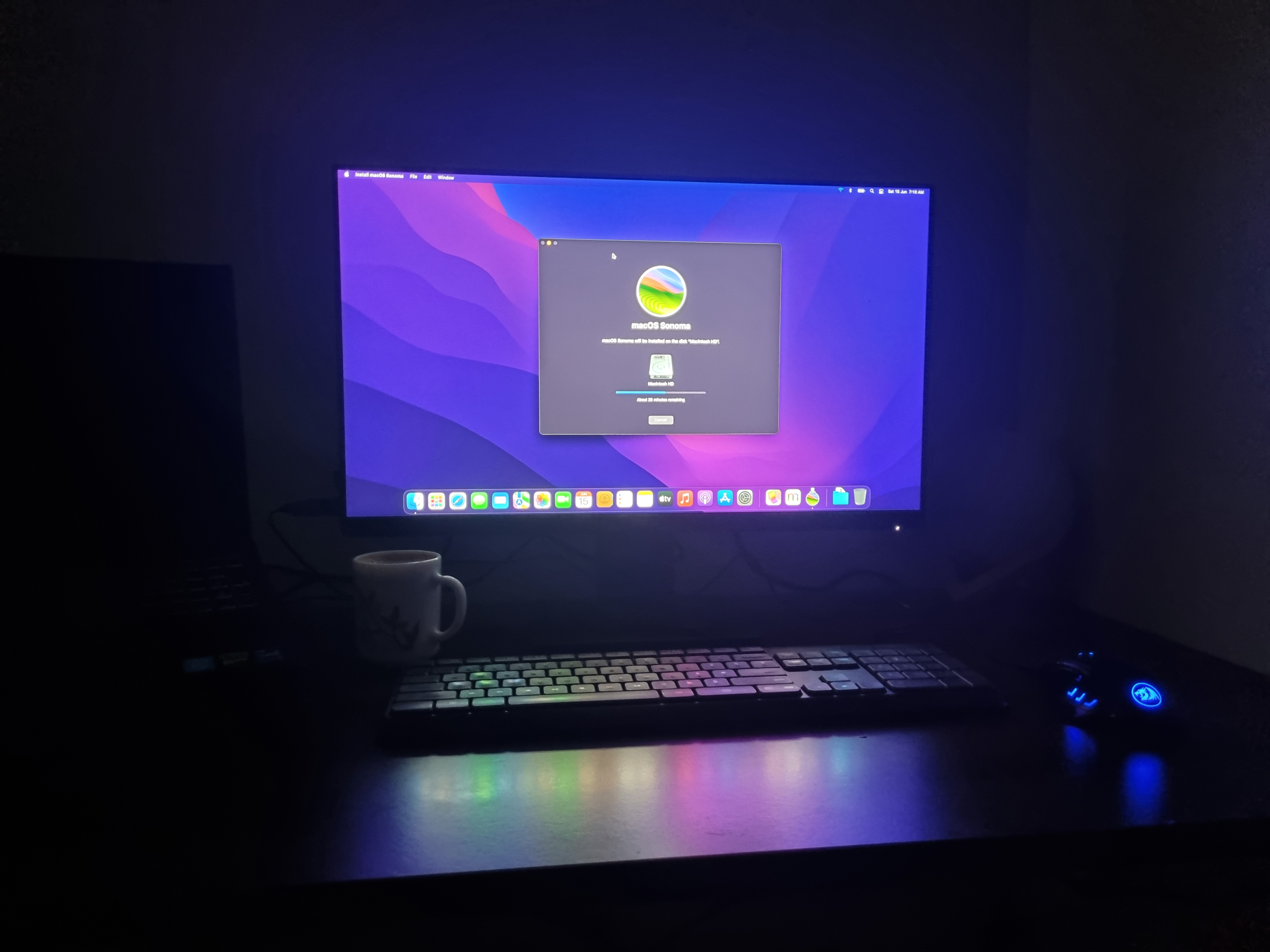
Before I close this off, I just want to say a thank you to the amazing community surrounding this space. All the development work that has gone behind this ensuring compatibility for a wide range of hardware is beyond reality. I see a lot of people ending up buying real Macs after hackintoshing and who knows? Maybe I'll be a part of them too someday...